Optimizing Talent Acquisition
Optimizing Talent Acquisition
Addressing employee turnover and high recruitment costs at Doosan, this project leveraged machine learning to enhance internal mobility and streamline recruiter screening efforts. Built on SAP Business Technology Platform and integrated with SAP SuccessFactors, the platform enables intelligent data‑driven decisions while supporting a new, self‑directed career development system for Millennial and Gen Z employees.
Addressing employee turnover and high recruitment costs at Doosan, this project leveraged machine learning to enhance internal mobility and streamline recruiter screening efforts. Built on SAP Business Technology Platform and integrated with SAP SuccessFactors, the platform enables intelligent data‑driven decisions while supporting a new, self‑directed career development system for Millennial and Gen Z employees.
Role
Role
Design Lead
User Research
UI/UX Design
Design Lead
User Research
UI/UX Design
Team
Team
Project Manager
Solution Expert
ML Engineers
UX designers
Project Manager
Solution Expert
ML Engineers
UX designers
Platform & Tools
Platform & Tools
Responsive web
SAP Fiori design system
Figma
Responsive web
SAP Fiori design system
Figma
Context
Context
Doosan Group is a multinational conglomerate and the world's seventh-largest supplier of construction machinery, with 43,000+ employees in 38 countries.
Doosan Group is a multinational conglomerate and the world's seventh-largest supplier of construction machinery, with 43,000+ employees in 38 countries.
More about Doosan
Doosan Website
The goal of the Human Resources department of Doosan Holdings was to maximize work engagement level. Doosan improved the individual employee satisfaction by providing opportunities for self-driven career development. The company provided HR applications for co-growth, both on the employee and corporate side, such as through the matching of talented employees against appropriate job opportunities across the company. This transparency allowed employees to be aware of vacant positions and make their individual choices.
The goal of the Human Resources department of Doosan Holdings was to maximize work engagement level. Doosan improved the individual employee satisfaction by providing opportunities for self-driven career development. The company provided HR applications for co-growth, both on the employee and corporate side, such as through the matching of talented employees against appropriate job opportunities across the company. This transparency allowed employees to be aware of vacant positions and make their individual choices.
To maximize work engagement
To improve employee satisfaction
For self-driven career development
Challenge
Challenge
Doosan Corp. faced a critical imbalance.
Doosan Corp. faced a critical imbalance.
High Talent Turnover
High Talent Turnover
Qualified employees were leaving the company, resulting in a loss of verified talent
Qualified employees were leaving the company, resulting in a loss of verified talent
Escalating Recruitment Costs
Escalating Recruitment Costs
The continuous loss led to excessive spending on external recruitment to fill the gaps
The continuous loss led to excessive spending on external recruitment to fill the gaps
Hiring Bottlenecks
Hiring Bottlenecks
Finding suitable external candidates was becoming increasingly difficult and competitive
Finding suitable external candidates was becoming increasingly difficult and competitive
of employees
wanting career changes left the company
of employees
left within 3 years of an internal transfer
Target Users
Target Users
Employees
Employees
Seeking growth through internal transfers
Seeking growth through internal transfers
Recruiters
Recruiters
Seeking efficient candidates screening, optimizing the hiring workflow
Seeking efficient candidates screening, optimizing the hiring workflow

Solution
AI-Powered Recruitment
Empowering Employees
Easily discover and apply for internal career development opportunities
Equipping Recruiters
Swiftly access AI-driven insights for efficient candidate screening
the Process & details
the Process & details
Exploring
Exploring
Two critical touchpoints
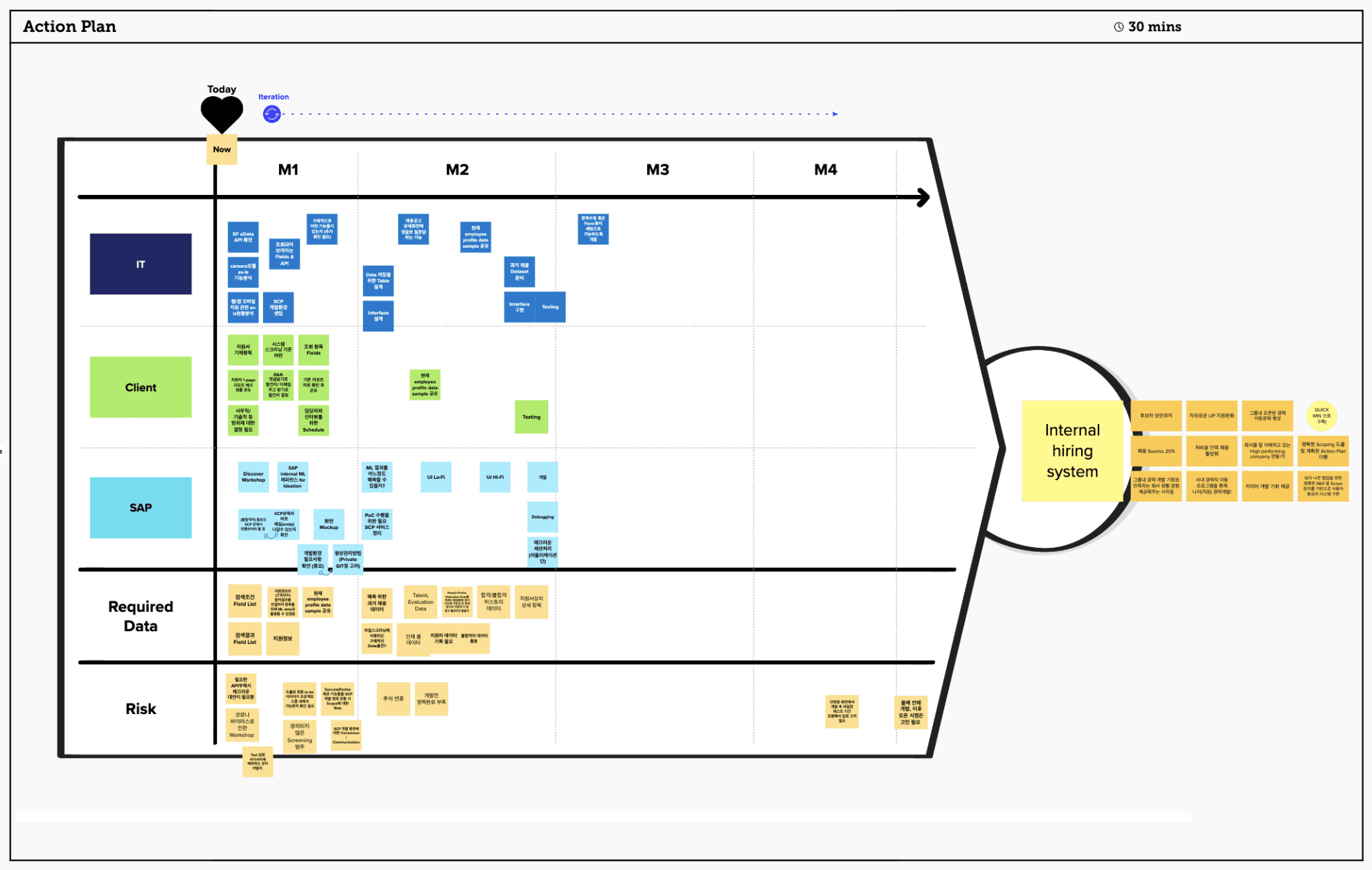
In the explore workshop, I invited all the stakeholders, and we aligned on foundations: mapping the as-is, solidifying objectives, and charting our roadmap.
Recruiter's
Screening process
Employee's
Job search experience
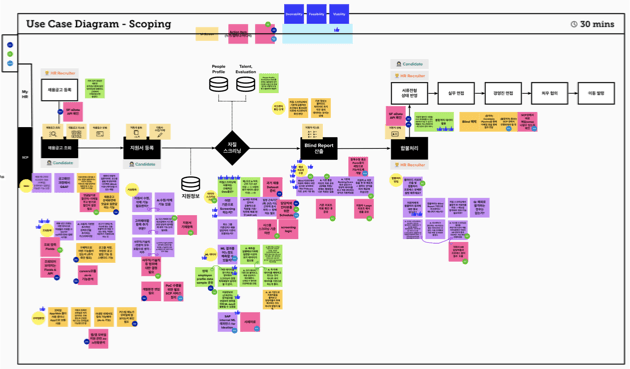
Identified the as-is internal recruitment process and mapped out the pain points
Conceptualize the to-be screen flows
Mapped out each key stakeholder's next actions to achieve the goal
Use Case Diagram
Key Screen Flow
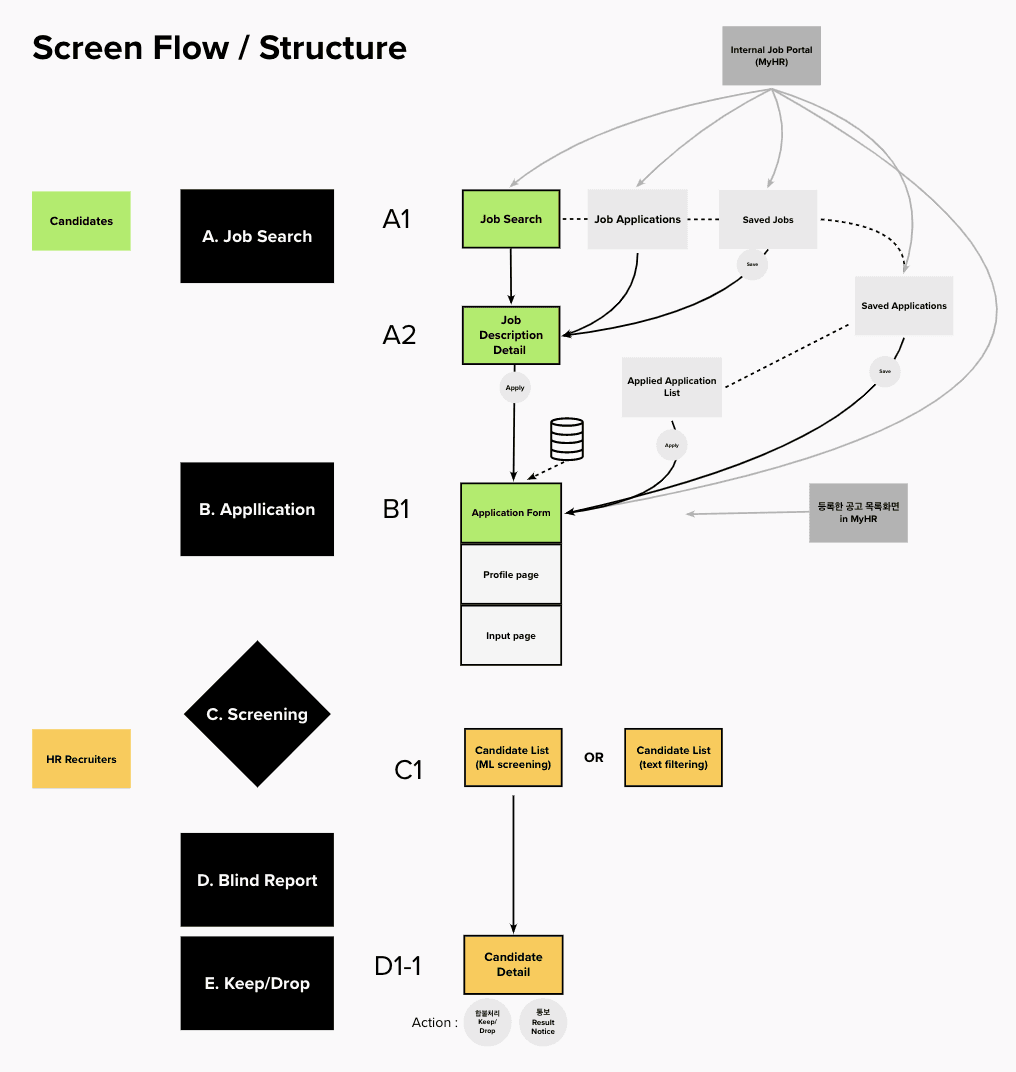
Action plan
Empathizing Users
Empathizing Users
User Research
User Research
Interviews & thematic analysis
Interviews & thematic analysis
Through thematic analysis, we identified key insights into target users' pain points, unmet needs, and expectations in the as-is process.
Through thematic analysis, we identified key insights into target users' pain points, unmet needs, and expectations in the as-is process.
Key finding areas
Key finding areas
Psychological Safety
Applicants need strict anonymity to prevent exposure to their current managers
Operational Efficiency
Recruiters feel overwhelmed by manual screening, struggling to balance quality with limited time
Information Transparency
Candidates demand clear role details and safe, anonymous communication channels
Merit-Based Fairness
Objective data and blind screening are required to ensure unbiased evaluations
See the process and artifacts
The Design Goals
The Design Goals
Design a healthy, sustainable internal hiring culture through technology
Design a healthy, sustainable internal hiring culture through technology
To answer this, we analyzed the existing barriers preventing smooth internal mobility. The comparison below outlines how we plan to transform current frustrations into a streamlined, employee-centric experience.
To answer this, we analyzed the existing barriers preventing smooth internal mobility. The comparison below outlines how we plan to transform current frustrations into a streamlined, employee-centric experience.
As-Is
Lack of system & Visibility
Lack of system & Visibility
Employees couldn't easily find opportunities or detailed job info for career growth
Employees couldn't easily find opportunities or detailed job info for career growth
Manual screening & Inefficiency
Manual screening & Inefficiency
Recruiters relied on spreadsheets, manually managing applications and reporting
Recruiters relied on spreadsheets, manually managing applications and reporting
Privacy Concerns
Privacy Concerns
Exposure of application information created unwanted workplace friction.
Exposure of application information created unwanted workplace friction.
To-Be
Enhanced Job Visibility & Access
Enhanced Job Visibility & Access
Create an HR solution based on the process and user needs
Create an HR solution based on the process and user needs
Streamlined & Supported Recruitment
Streamlined & Supported Recruitment
An efficient system reducing recruiter manual tasks and screening processing
An efficient system reducing recruiter manual tasks and screening processing
Ensured Data Protection & Confidentiality
Ensured Data Protection & Confidentiality
A secure platform preventing unauthorized exposure of application information
A secure platform preventing unauthorized exposure of application information
See the process and artifacts
Building ML Model
Building ML Model
Discussions for machine learning
Discussions for machine learning
With data scientists, ML engineers, and Doosan IT, we discussed and defined data types needed to enable machine learning-based screening. We decided to develop the first model, run it with existing data, and deploy the model while teaching it with accumulated data from the first year.
With data scientists, ML engineers, and Doosan IT, we discussed and defined data types needed to enable machine learning-based screening. We decided to develop the first model, run it with existing data, and deploy the model while teaching it with accumulated data from the first year.
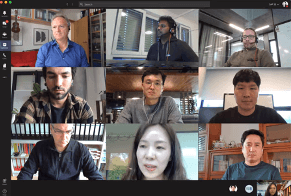
Framing the data questions
Framing the data questions
In the first workshops with HR, IT, and data, the group aligned on four questions:
In the first workshops with HR, IT, and data, the group aligned on four questions:
What data do we already use when choosing internal candidates today?
Which of those data exist in My HR, and in what format, e.g., dates, text, scores?
How much historical data is realistic to start with?
Which data must be visible and explainable in the UI versus used only behind the scenes?
What data do we already use when choosing internal candidates today?
Which of those data exist in My HR, and in what format, e.g., dates, text, scores?
How much historical data is realistic to start with?
Which data must be visible and explainable in the UI versus used only behind the scenes?
Defining a data set for screnning
Defining a data set for screnning
Discussed a screening data set, screening items for levels, and each weight value in order to eventually create a system-recommended shortlist for particular positions
Discussed a screening data set, screening items for levels, and each weight value in order to eventually create a system-recommended shortlist for particular positions
Starting from legacy HR data
Starting from legacy HR data
Due to not yet enough high‑quality, labeled data to fully justify every AI recommendation, the team chose to build the first screening model on the existing records in the legacy HR system
Due to not yet enough high‑quality, labeled data to fully justify every AI recommendation, the team chose to build the first screening model on the existing records in the legacy HR system
Building system architecture
Building system architecture
Developed the system architecture integrating with the legacy system, SAP SuccessFactors, and SAP Data Intelligence, built in SAP Business Technology Platform (BTP)
Developed the system architecture integrating with the legacy system, SAP SuccessFactors, and SAP Data Intelligence, built in SAP Business Technology Platform (BTP)
Defining the first training plan
Defining the first training plan
Because the company already had multiple years of HR records, the team agreed on a two‑phase plan:
Because the company already had multiple years of HR records, the team agreed on a two‑phase plan:
Phase 1 – Learn from the past
Phase 1 – Learn from the past
Use several years of historical internal moves, evaluations, and project records as training data to teach the model what “successful internal placement” looked like.
Use several years of historical internal moves, evaluations, and project records as training data to teach the model what “successful internal placement” looked like.
Phase 2 – Learn from the next year
Phase 2 – Learn from the next year
un the model in parallel with existing HR processes for about a year, log every recommendation, and capture how recruiters and managers respond
un the model in parallel with existing HR processes for about a year, log every recommendation, and capture how recruiters and managers respond
Prototyping
Prototyping
Design
Design
Rapid co-prototyping: sketching & validating initial concepts with users
Rapid co-prototyping: sketching & validating initial concepts with users
In a co-ideation workshop with users and stakeholders, we translated research insights into refined personas, user journeys, and prioritized solutions for the MVP, fostering a shared project vision.
In a co-ideation workshop with users and stakeholders, we translated research insights into refined personas, user journeys, and prioritized solutions for the MVP, fostering a shared project vision.
See the process and artifacts
Design Iterations
Design Iterations
Leveraged machine learning for the final iteration
Leveraged machine learning for the final iteration
We leveraged the machine learning capability to the system to provide recruiters initial insightful screening results, which reduce the tedious tasks and make it shorter by 3 times.
We leveraged the machine learning capability to the system to provide recruiters initial insightful screening results, which reduce the tedious tasks and make it shorter by 3 times.
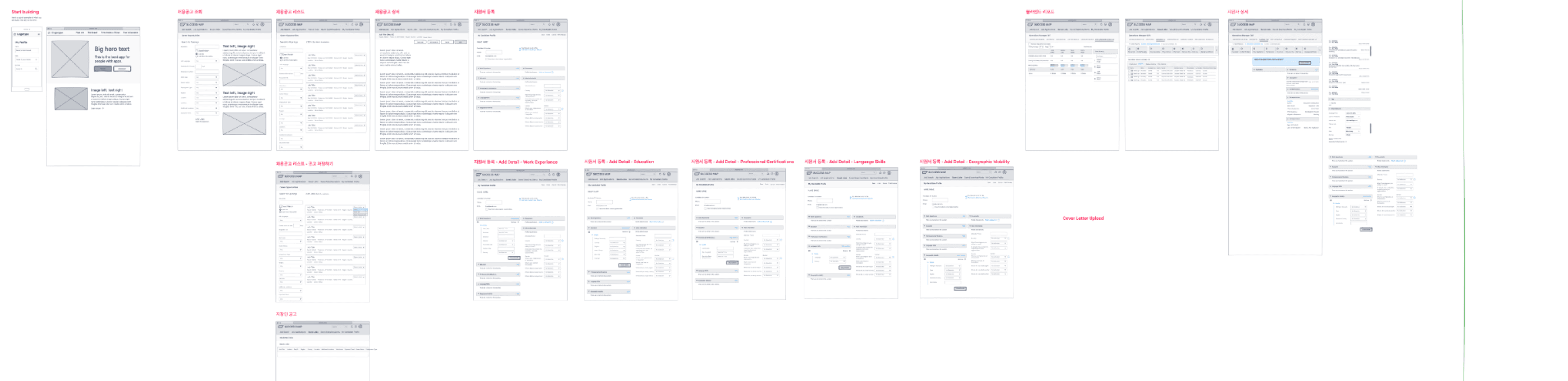
Initial concept based on SAP SuccessFactors standard
Initial concept based on SAP SuccessFactors standard
Redesign for customizable applicant data entry
Redesign for customizable applicant data entry

Optimize with ML insights to reduce manual screening and boost efficiency
Optimize with ML insights to reduce manual screening and boost efficiency
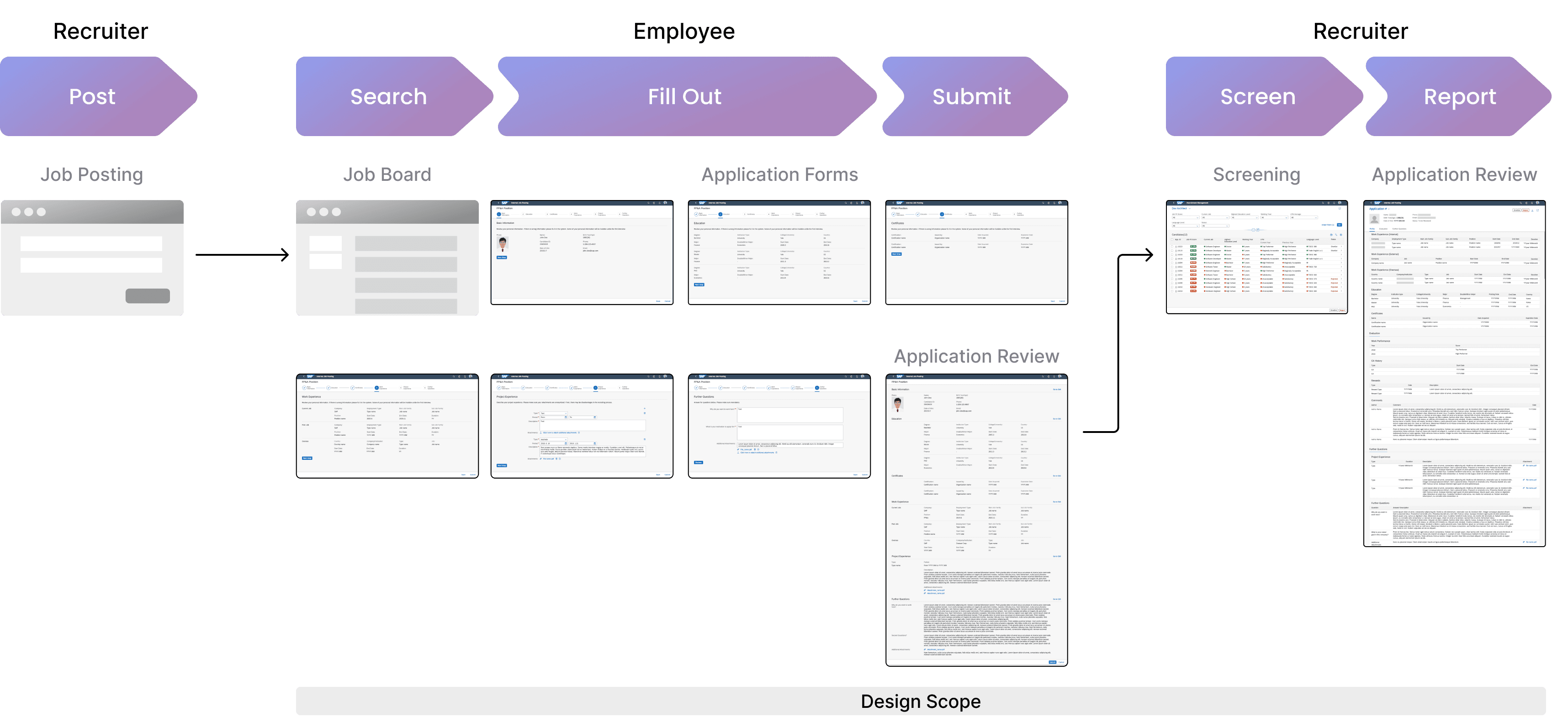
User Flow
User Flow
Design iterations: enhancing usability & integrating intelligence
Design iterations: enhancing usability & integrating intelligence
We leveraged the machine learning capability ins the system to provide recruiters with initial insightful screening results, which reduces the tedious tasks and make it shorter by 3 times.
We leveraged the machine learning capability ins the system to provide recruiters with initial insightful screening results, which reduces the tedious tasks and make it shorter by 3 times.
Design Solution
Design Solution
Employees
Employees
Seeking growth through internal transfers
Seeking growth through internal transfers
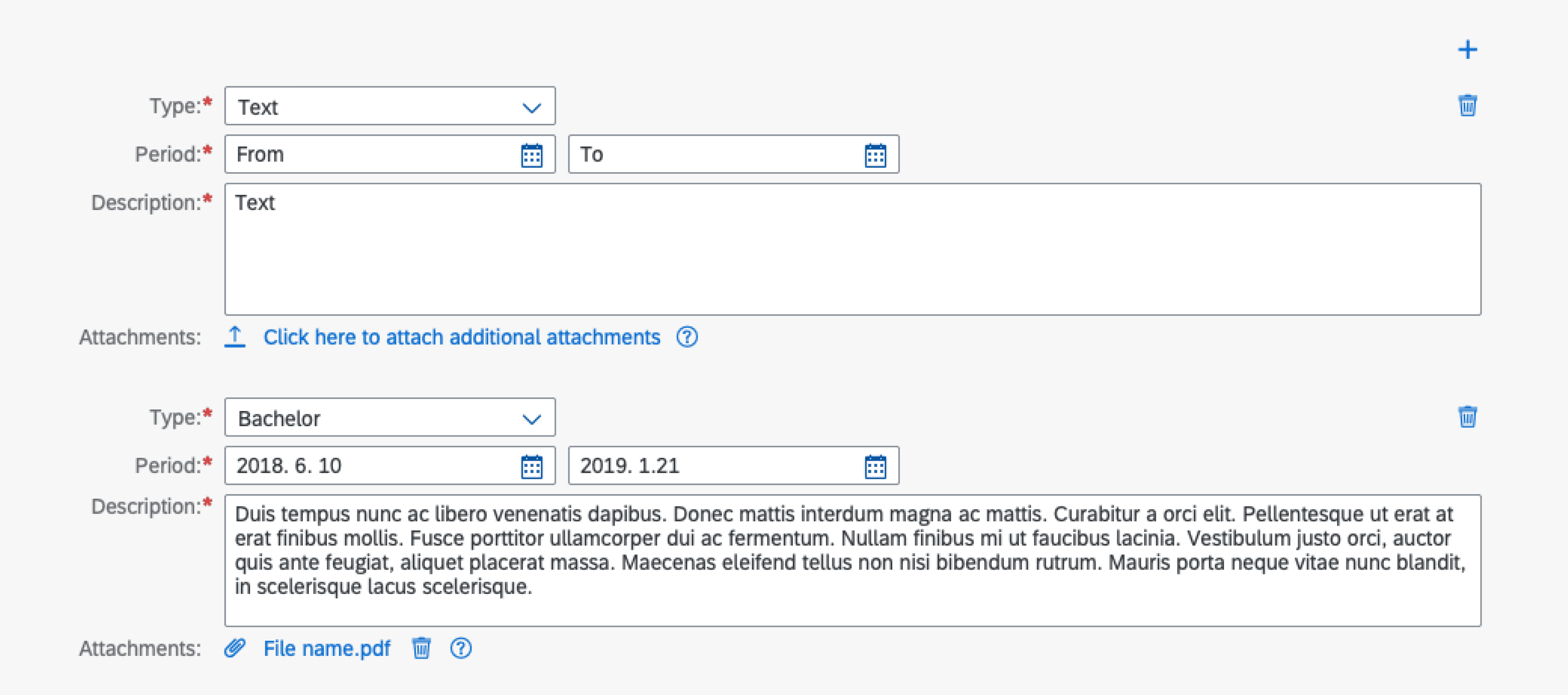
Facilitating in-depth applicant data for experienced candidates
Facilitating in-depth applicant data for experienced candidates
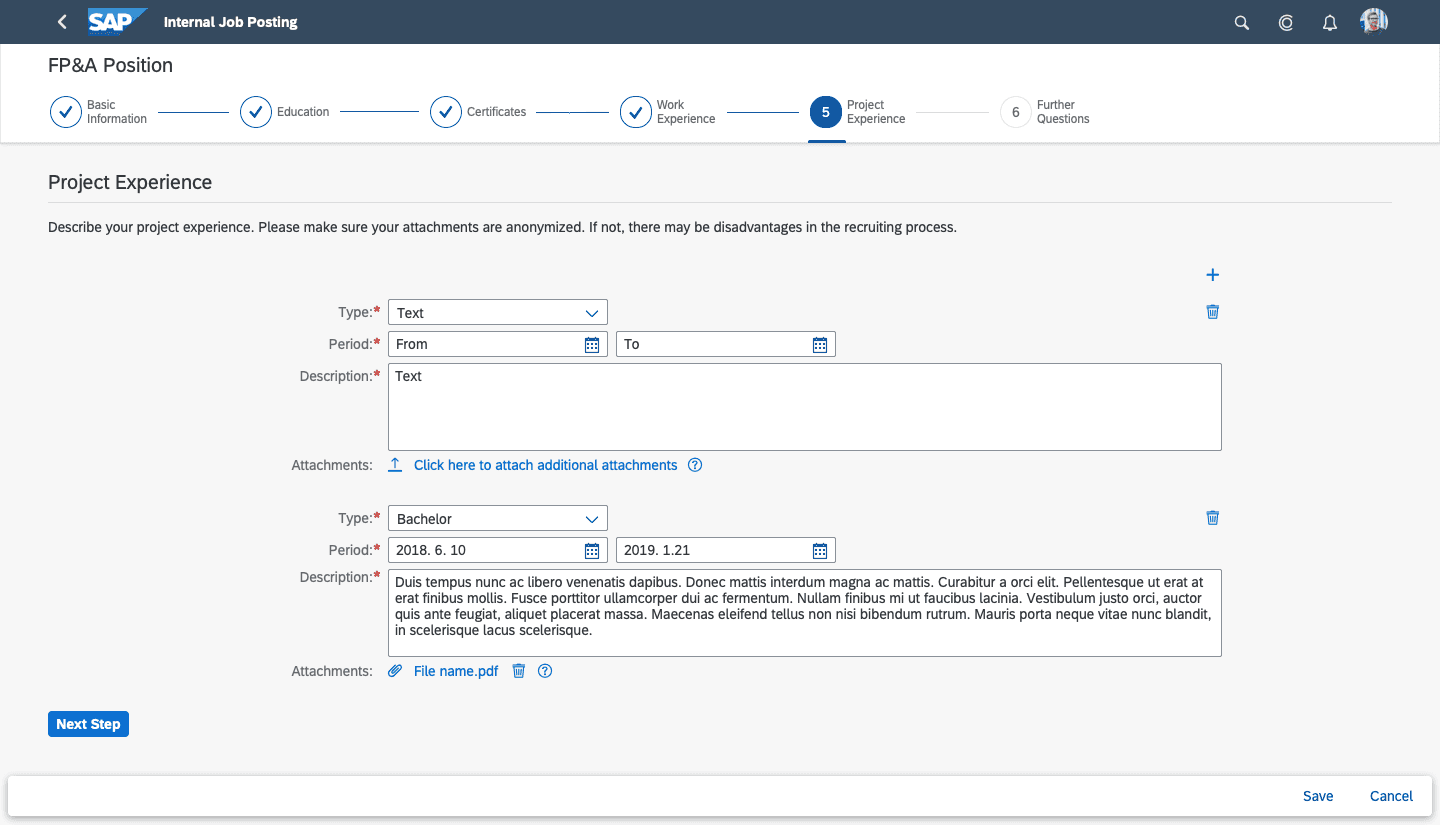
Enabling users to input application data efficiently by categories: personal information, education, certificates, work experience, project experience, and questions.
Enabling users to input application data efficiently by categories: personal information, education, certificates, work experience, project experience, and questions.
SAP Standard Design
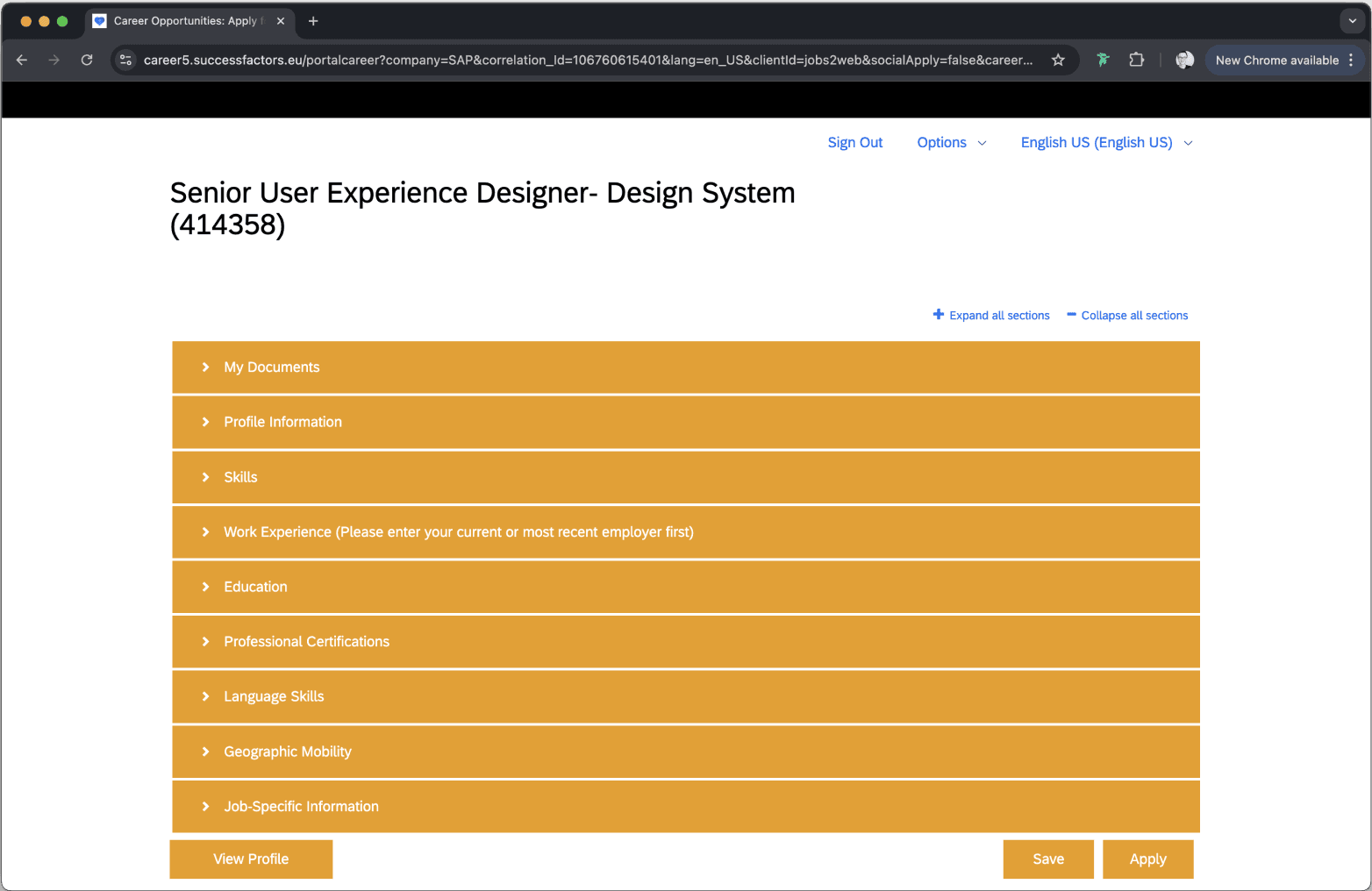
To-Be

Recruiters
Recruiters
Seeking efficient candidates screening, optimizing the hiring workflow
Seeking efficient candidates screening, optimizing the hiring workflow
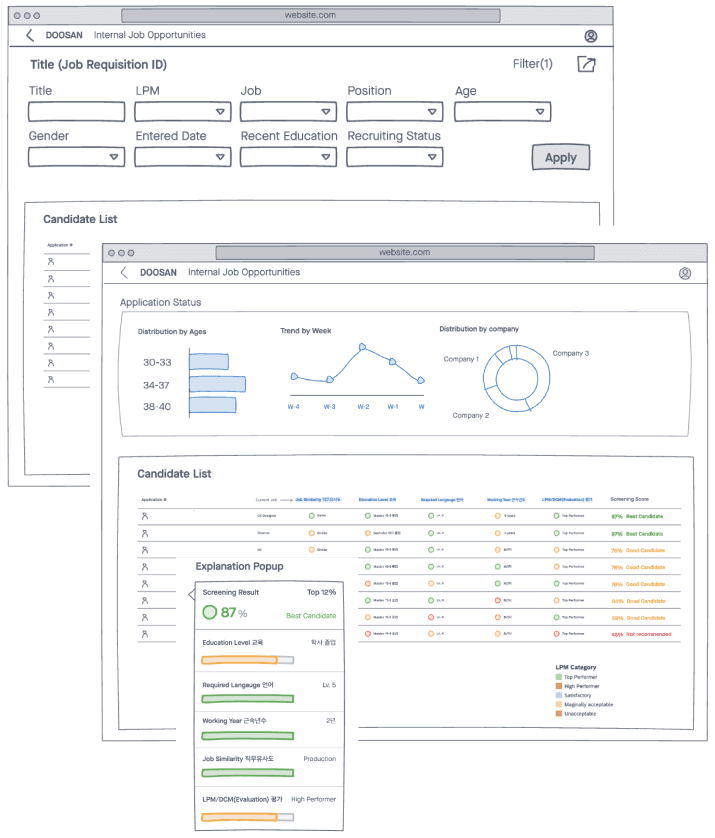
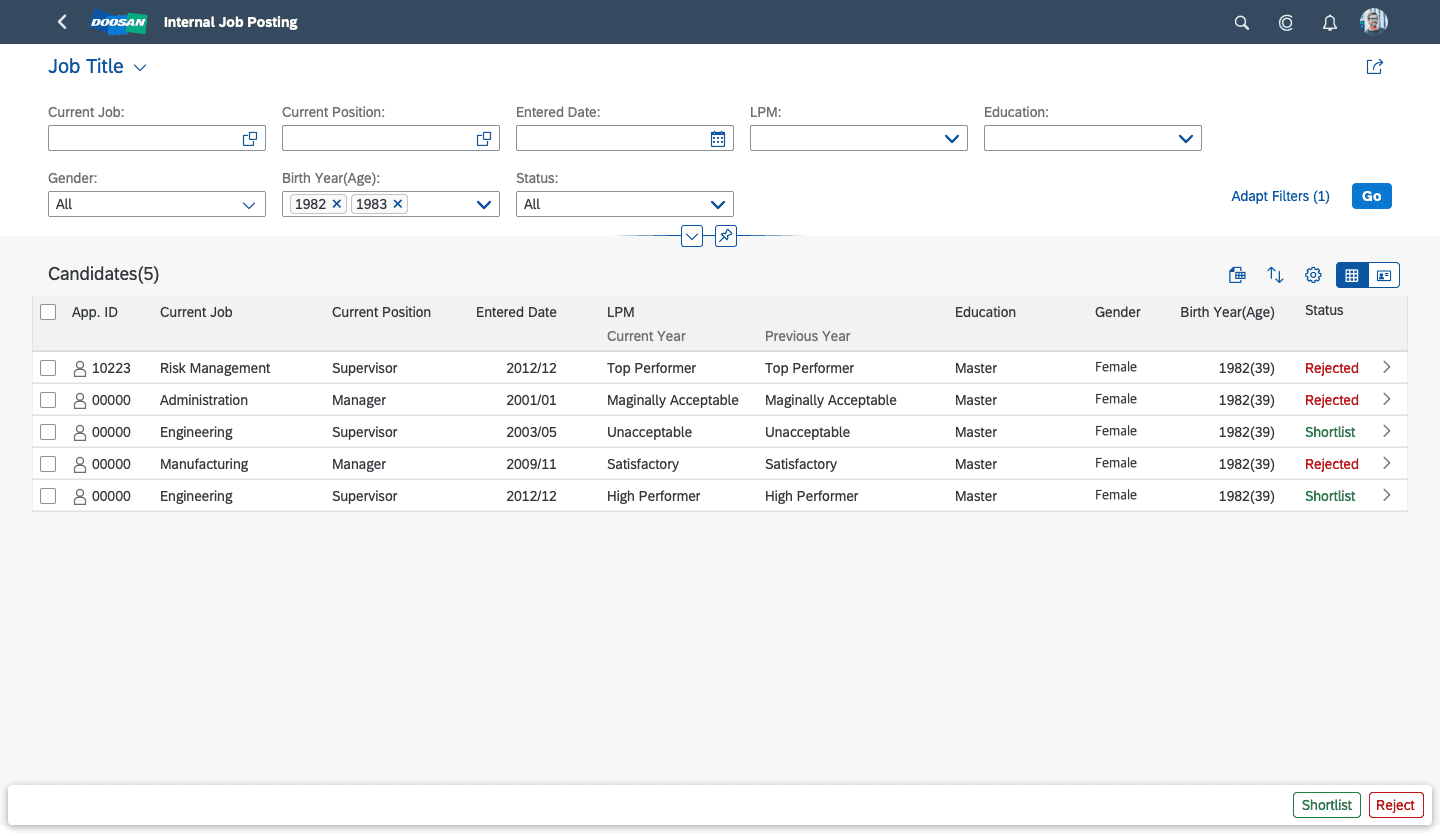
Intelligent screening: AI-powered insights for recruiters
Intelligent screening: AI-powered insights for recruiters
Automated screening enables recruiters to swiftly access valuable insights about potential candidates.
Automated screening enables recruiters to swiftly access valuable insights about potential candidates.
Standard design
AI-adopted design
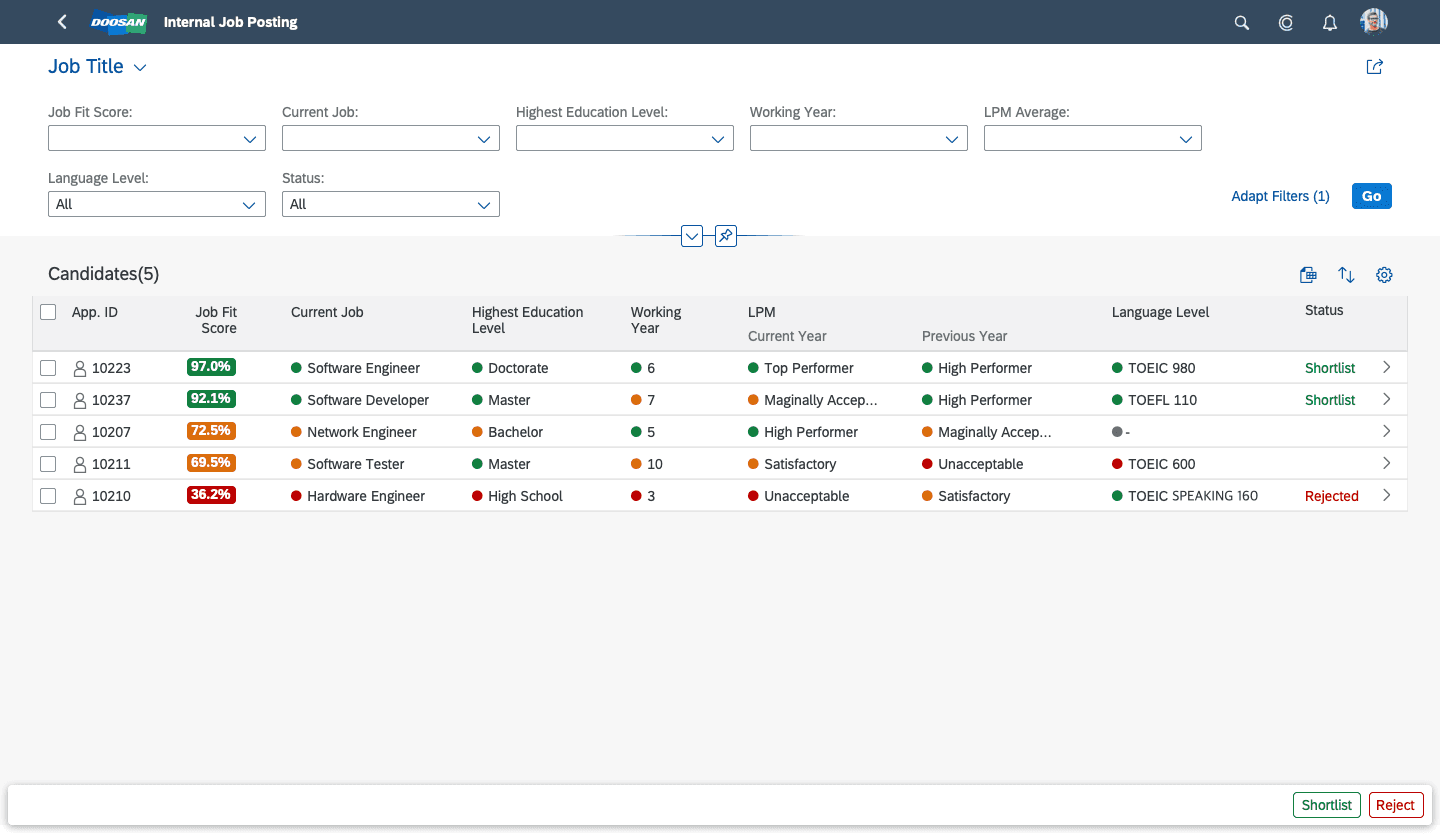
*Designed using SAP Fiori 3.0
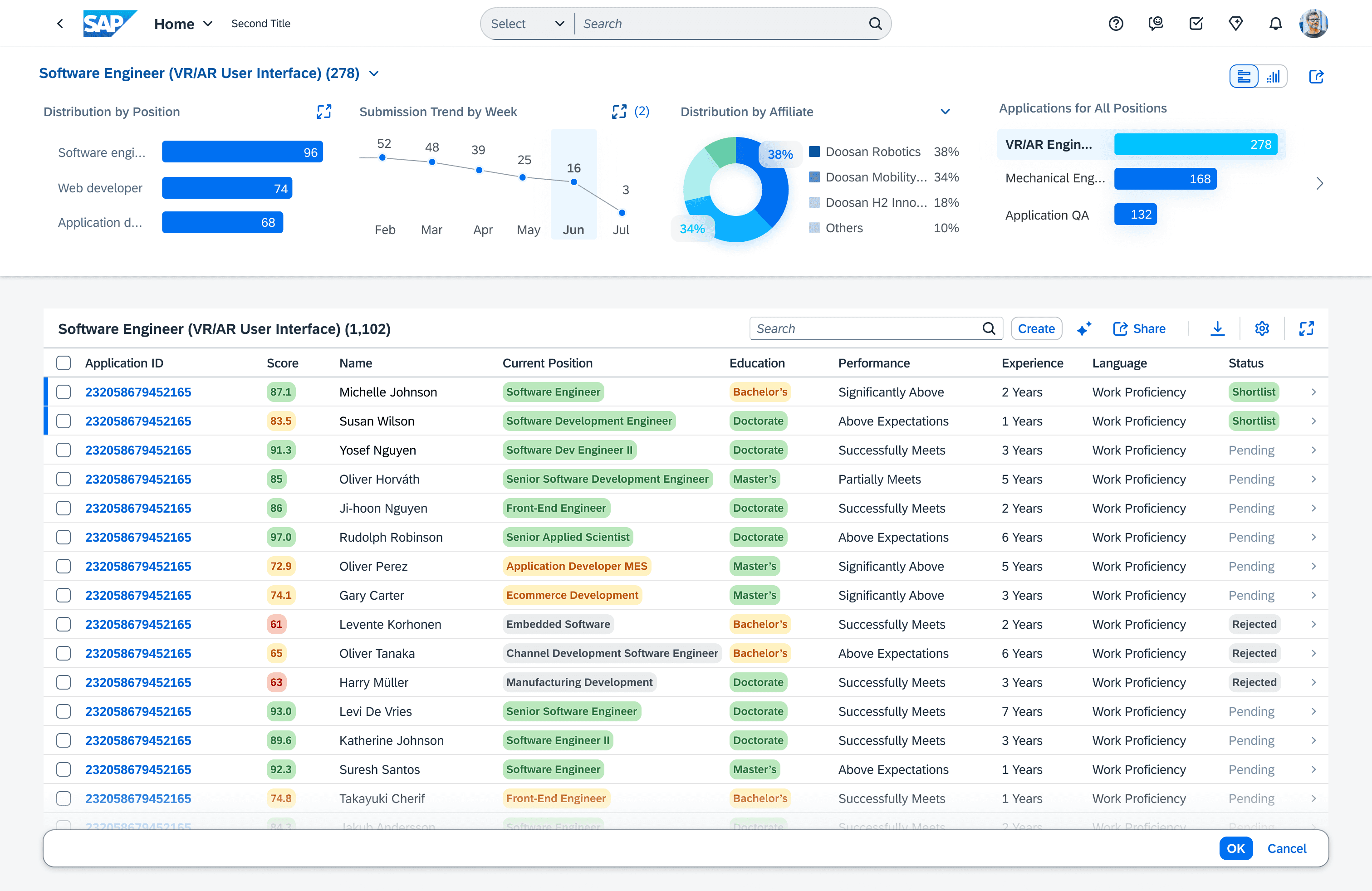
AI-enhanced candidate list: surfacing key insights at a glance
AI-enhanced candidate list: surfacing key insights at a glance
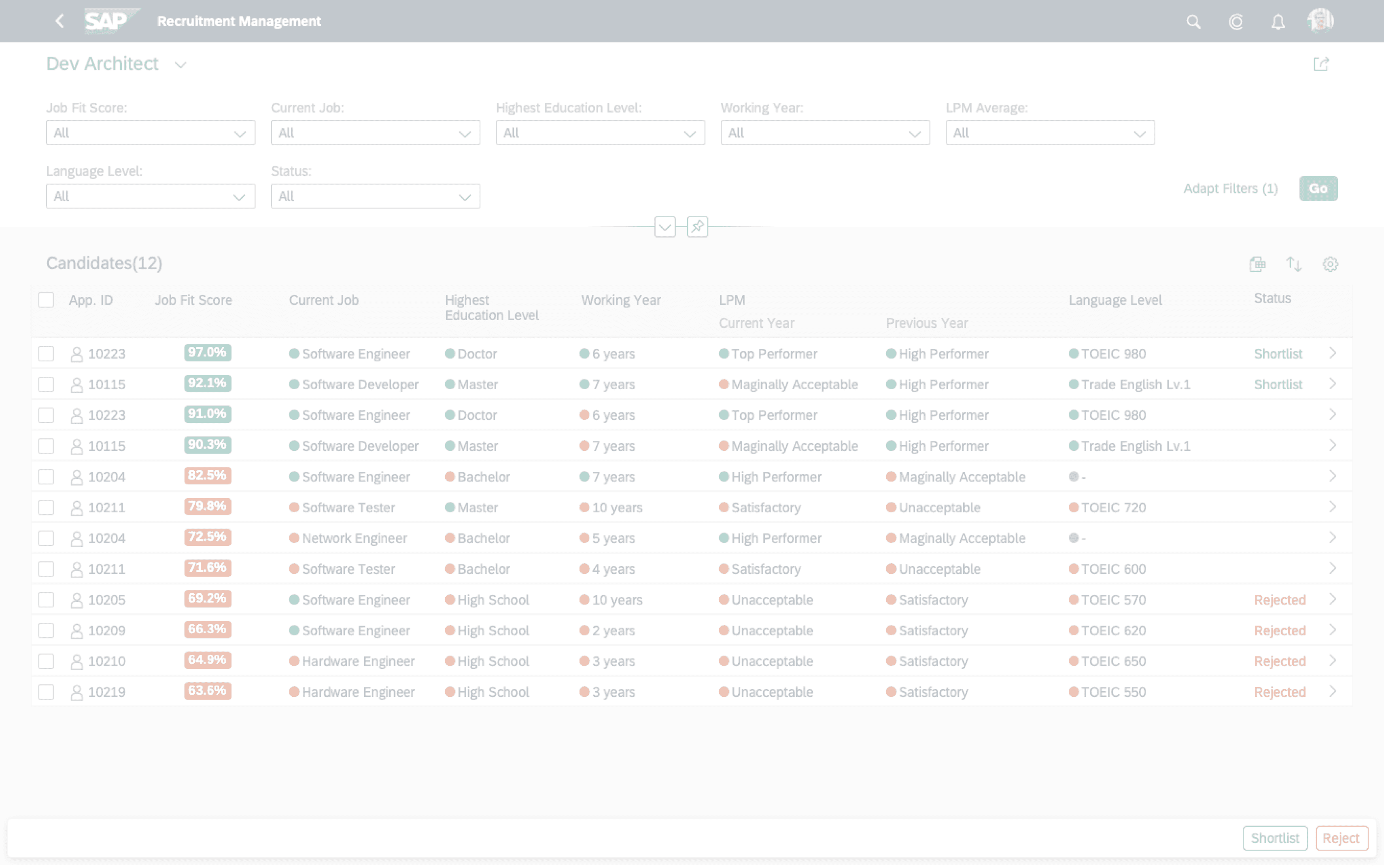

Navigation: Recruiters can easily switch between different job requisitions
Filter bar: recruiters to quickly refine the list based on multiple criteria with a few clicks
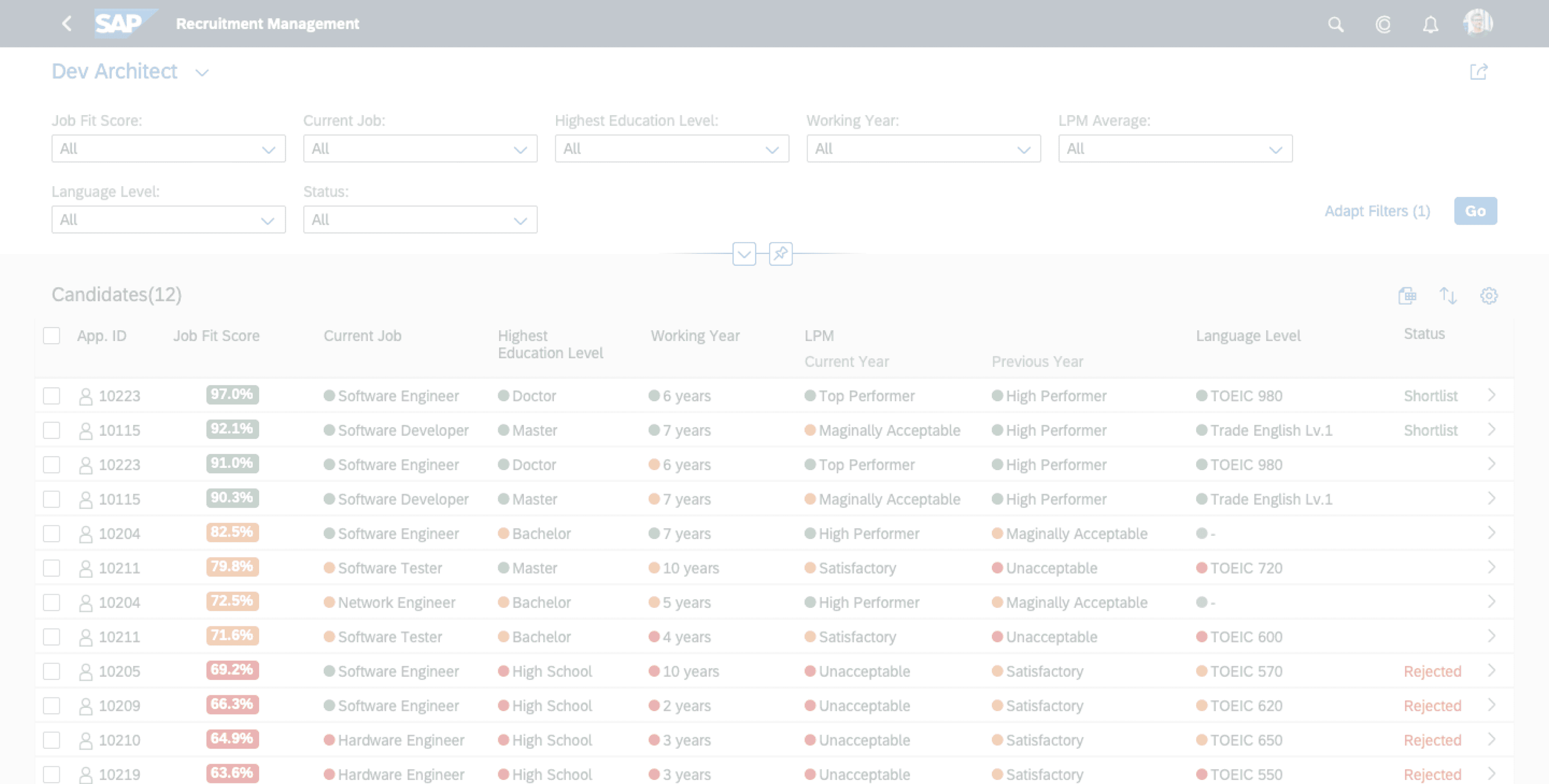
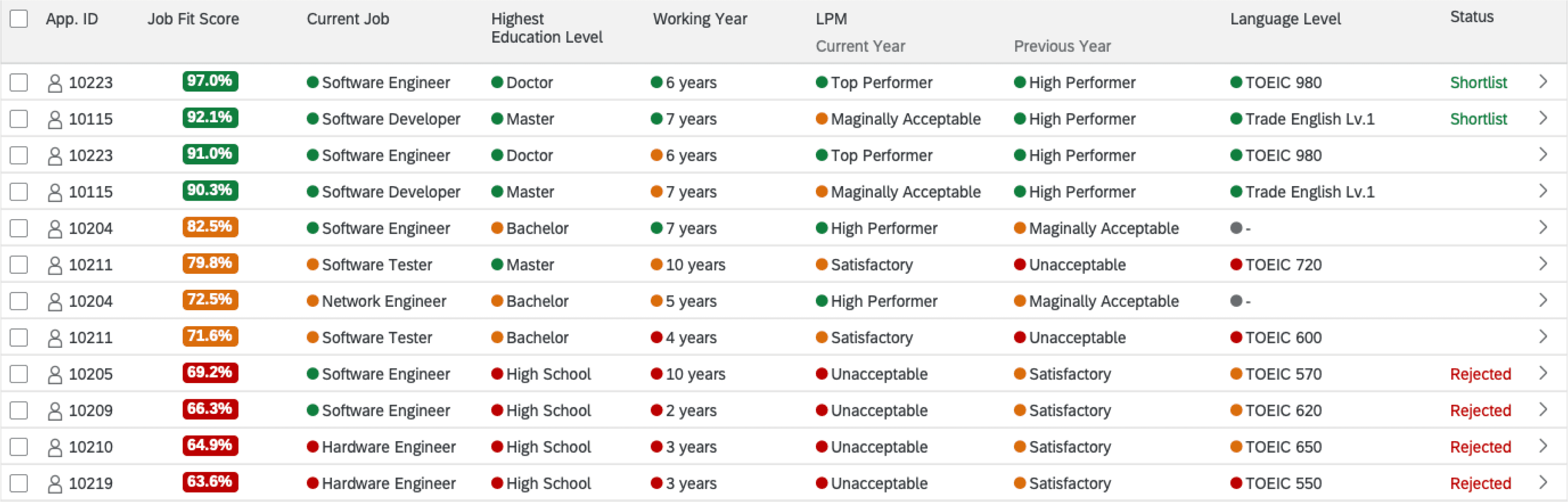
Indicators: Color-coded icons offer quick visual cues on how well a candidate meets criteria
Comprehensive List: Tabular format helps efficient comparison
At-a-Glance Suitability: Three different colors indicate the application’s suitability
At-a-Glance Suitability: Three different colors indicate the application’s suitability
Indicators: Color-coded icons offer quick visual cues on how well a candidate meets criteria
Comprehensive List: Tabular format helps efficient comparison
At-a-Glance Suitability: Three different colors indicate the application’s suitability
Results
Results
Data-driven people management: Designing an intelligent analytical dashboard
Data-driven people management: Designing an intelligent analytical dashboard
The platform significantly increased internal mobility and transparency by making AI‑recommended roles far more visible, which in turn drove a step‑change in successful internal transfers and kept more high‑potential employees growing within the company.
The platform significantly increased internal mobility and transparency by making AI‑recommended roles far more visible, which in turn drove a step‑change in successful internal transfers and kept more high‑potential employees growing within the company.
x5
x5
internal transfer
internal transfer
x15
x15
opportunity visibility
opportunity visibility
Employee retention rate increased by 32%
Employee retention rate increased by 32%
The productivity of recruiters increased by 2.8 times
The productivity of recruiters increased by 2.8 times
The number of external hires decreased by about 30%
The number of external hires decreased by about 30%
Employee satisfaction & engagement related to career development enhanced by 26%
Employee satisfaction & engagement related to career development enhanced by 26%
Impact
Impact
Company
Company
23% reduction in employee turnover
Lower external recruitment costs
Stronger culture of internal mobility
Recruiters
Recruiters
Reduced manual screening effort
Data-driven candidate decisions
Streamlined, centralized workflow
Employees
Employees
Clear internal career pathways
Transparent job information
Trusted, confidential application process
What's next?
What's next?
Future
Driection
Future Driection
Future Driection
Data-driven dashboard & visual intelligence
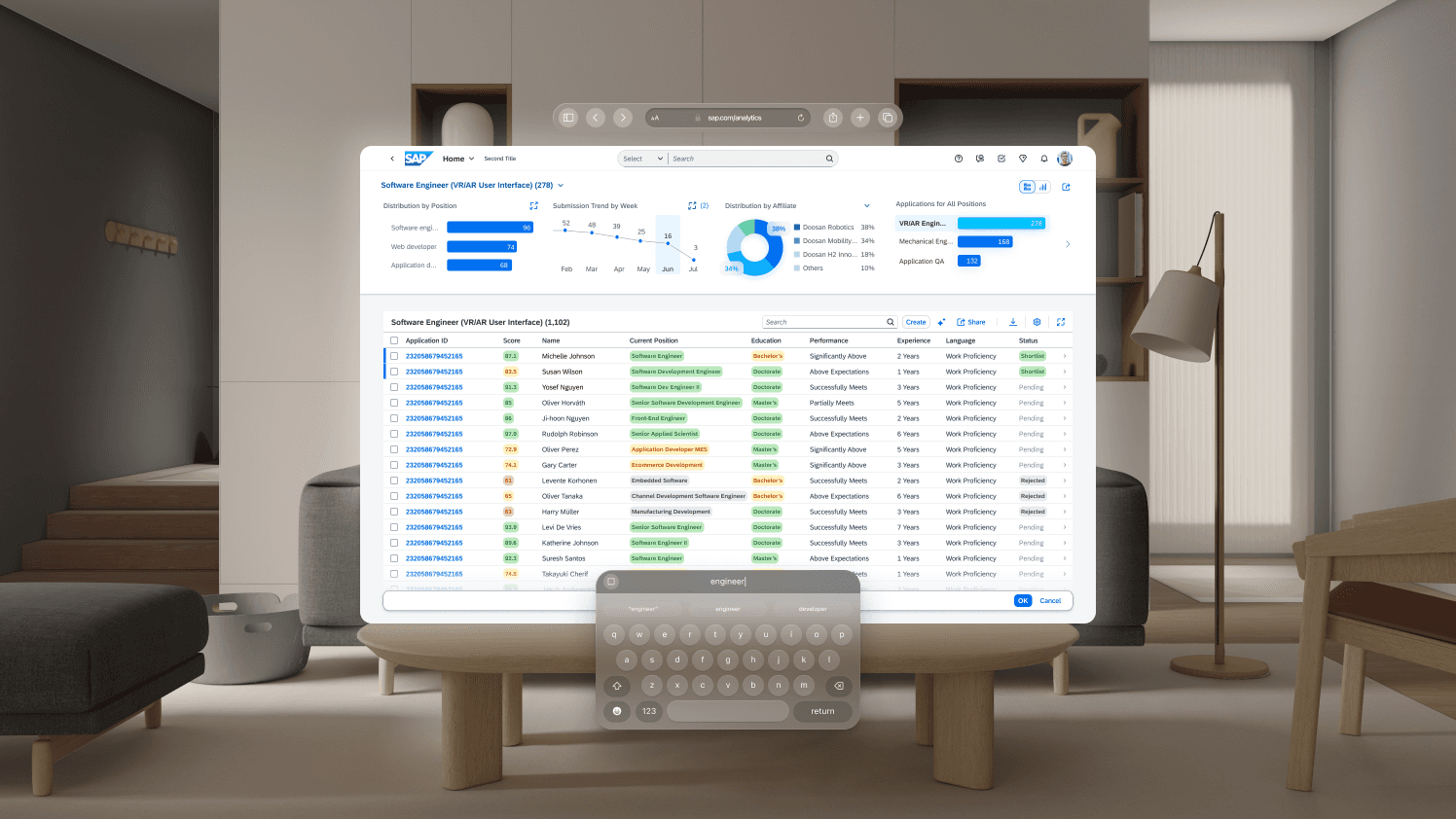
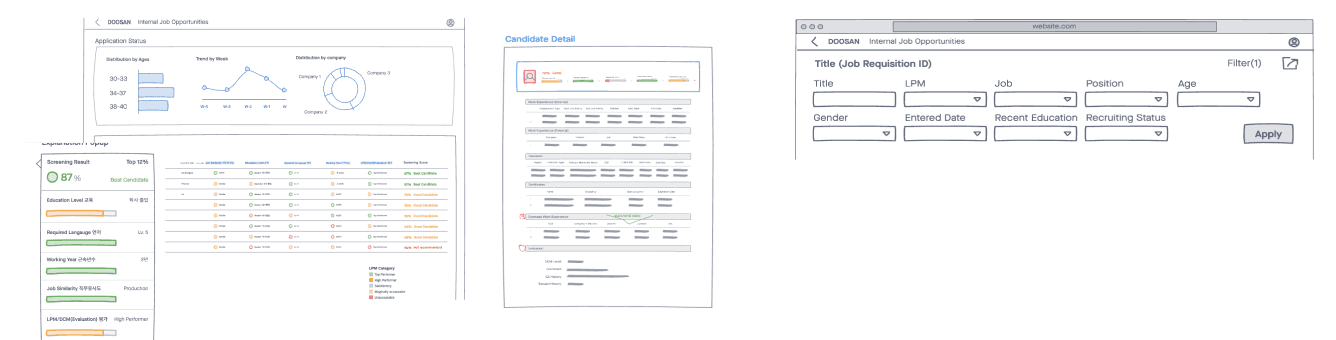
This dashboard design enables recruiters to identify trends, investigate root causes via drill-downs, and gain actionable insights from rich visualizations.
This dashboard design enables recruiters to identify trends, investigate root causes via drill-downs, and gain actionable insights from rich visualizations.
*Designed using the latest SAP Fiori Horizon design system

Scoring Visualization: Help instantly recognize in-depth reasoning

Interactive Visual Filtering: Enables filtering data visually and spotting trends immediately.
B. Scalable level of AI autonomy
B. Scalable level of AI autonomy
Design the third explanation level visually to offer deeper insights into applications.
Design the third explanation level visually to offer deeper insights into applications.
Level 1
Descriptive
Minimum Viable Insight. Displays the raw compatibility score and basic status.
Level 2
Explanatory
Contextual Rationale. Provides a breakdown of key factors influencing the score
Level 3
Advanced Explainability
Deep Insight & Control. Offers a granular view of the algorithm’s logic and suggests actionable next steps.
C. Predictive workforce planning
C. Predictive workforce planning
Envisioning a holistic ecosystem that connects recruitment with business strategy. By integrating external market data (e.g., LinkedIn) and internal talent pools with predictive business metrics
Envisioning a holistic ecosystem that connects recruitment with business strategy. By integrating external market data (e.g., LinkedIn) and internal talent pools with predictive business metrics
External Market Data
Predictive Recruitment
Internal Talent Pools
Dept. Demands
Future Task Volume
Budget Forcasts
At Scale
At Scale

The solution has been scaled as a independant service.
The solution has been scaled as a independant service.
Peoply is a cloud SaaS solution, built in the SAP Business Technology Platform.
Peoply is a cloud SaaS solution, built in the SAP Business Technology Platform.
Takeaways
Takeaways
Collaboration for AI product development
Collaboration for AI product development
Experienced the need for the end-to-end collaboration with data scientists, ML engineers, and domain experts for successful AI design
Experienced the need for the end-to-end collaboration with data scientists, ML engineers, and domain experts for successful AI design
User interface design patterns for human-AI interaction
User interface design patterns for human-AI interaction
Learned design patterns used to manage the trade-off between user control and automation, and to mitigate over-reliance using explainability techniques
Learned design patterns used to manage the trade-off between user control and automation, and to mitigate over-reliance using explainability techniques
Balancing automation with user control
Balancing automation with user control
Learned the importance of AI as an assistant, providing transparency and user override capabilities
Learned the importance of AI as an assistant, providing transparency and user override capabilities
The critical role of data quality in AI UX
The critical role of data quality in AI UX
Recognized that designing the 'data experience' (input, processing, display) is as crucial as the UI for AI effectiveness
Recognized that designing the 'data experience' (input, processing, display) is as crucial as the UI for AI effectiveness
Appreciation
Appreciation
“It was a great opportunity to experience the whole process of Human centered design approach, development, and collaboration for an AI-powered HR product design. It was a delightful experience as a SAP developer due to the strong backup of UX designers, Earl's team, that made such development possible.”
“It was a great opportunity to experience the whole process of Human centered design approach, development, and collaboration for an AI-powered HR product design. It was a delightful experience as a SAP developer due to the strong backup of UX designers, Earl's team, that made such development possible.”
Minchoul Jung, project manager and developer, Doosan IT
Minchoul Jung, project manager and developer, Doosan IT
“In a global collaboration with Doosan, we developed a use case along SAP’s Human-Centered Approach to Innovation. We decided to implement an enhanced job candidate screening through specific job requisitions. I really enjoyed working together with Earl's team and Doosan IT."
“In a global collaboration with Doosan, we developed a use case along SAP’s Human-Centered Approach to Innovation. We decided to implement an enhanced job candidate screening through specific job requisitions. I really enjoyed working together with Earl's team and Doosan IT."
Kay Schmitteckert, Developer, SAP Strategic Customer Engagements
Kay Schmitteckert, Developer, SAP Strategic Customer Engagements